Walk into a home that stays comfortable all year long and you may not immediately notice what makes the difference. The temperature feels stable, the air seems cleaner, and heating or cooling systems do not struggle to keep up with the weather outside. One of the hidden factors that can create this kind of comfort is proper insulation.
Among modern insulation options, spray foam insulation has become a popular solution for improving energy efficiency and sealing homes against unwanted air movement. Understanding how spray foam insulation works can help homeowners make informed decisions about improving comfort, reducing energy costs, and protecting their homes. Contact Ultimate Radiant Barrier for more information.
Understanding Spray Foam Insulation
Spray foam insulation is a type of insulation material that is applied as a liquid and expands into foam after it is sprayed onto a surface. As the material expands, it fills gaps, cracks, and cavities within walls, ceilings, and other structural spaces.
The expansion process allows the foam to create an airtight barrier that reduces the movement of air between indoor and outdoor environments. This barrier helps maintain indoor temperatures more effectively.
Spray foam insulation differs from traditional insulation materials such as fiberglass or cellulose. While those materials primarily slow down heat transfer, spray foam also helps seal small openings that allow air to leak through the building structure.
Because the foam expands to fill irregular spaces, it can reach areas that are difficult to insulate using traditional materials. This feature makes spray foam especially useful in spaces with unusual shapes or tight corners.
By combining insulation with air sealing, spray foam helps improve the overall efficiency of a building.
Types of Spray Foam Insulation
Spray foam insulation is generally divided into two main categories. These types differ in density, flexibility, and how they perform in different parts of a building.
Open cell spray foam is lighter and softer than other forms of foam insulation. When applied, it expands significantly and creates a flexible structure that can absorb sound and help reduce noise transmission.
This type of foam is often used inside walls, ceilings, and interior spaces where flexibility and sound reduction are beneficial. Its lighter structure allows it to fill large cavities easily.
Closed cell spray foam has a denser structure and provides a stronger barrier against air and moisture. Because of its compact composition, it also adds structural strength to certain building components.
Closed cell foam is often used in areas where moisture resistance and durability are especially important, such as exterior walls, crawl spaces, and roofing systems.
Both types of spray foam insulation provide effective thermal resistance and air sealing, though each is suited for different applications.
How Spray Foam Insulation Improves Energy Efficiency
Energy efficiency is one of the primary reasons homeowners consider spray foam insulation. Heating and cooling systems must work harder when conditioned air escapes through gaps in walls, ceilings, or foundations.
Spray foam insulation helps reduce this problem by sealing air leaks throughout the building structure. When the foam expands into cracks and gaps, it blocks pathways where air might otherwise escape.
This airtight barrier allows heating and cooling systems to maintain indoor temperatures more easily. As a result, less energy is required to keep the home comfortable.
Improved insulation also reduces temperature fluctuations between rooms. Homes with effective insulation often feel more consistent and balanced in temperature.
By reducing the workload on heating and cooling systems, spray foam insulation can contribute to lower energy consumption and improved efficiency.
The Spray Foam Installation Process
Installing spray foam insulation involves several steps designed to ensure proper coverage and performance. The process begins with an inspection of the areas that require insulation.
Before application, surfaces are prepared to ensure the foam adheres properly. Any debris or dust that could interfere with adhesion may be removed.
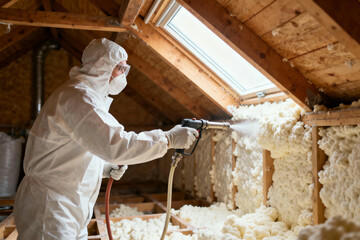
During installation, specialized equipment mixes the foam components and sprays them onto the desired surface. As the material is applied, it expands rapidly to fill the surrounding space.
The expansion process allows the foam to conform to the shape of the cavity, creating a tight seal against air infiltration. Installers monitor the thickness and coverage to ensure the insulation performs as intended.
After application, the foam is allowed to cure and harden. Once cured, the material becomes a stable layer of insulation that remains in place for many years.
Proper installation ensures that the insulation delivers the full benefits of thermal protection and air sealing.
Benefits of Spray Foam Insulation for Home Comfort
Spray foam insulation offers several advantages that extend beyond energy efficiency. One of the most noticeable benefits is improved indoor comfort.
Because spray foam reduces drafts and air leaks, indoor temperatures remain more stable throughout the home. Rooms that previously felt colder or warmer than others may become more balanced.
The airtight seal created by spray foam also helps prevent outdoor pollutants from entering the home. Dust, pollen, and other airborne particles have fewer pathways to move indoors.
Moisture control is another important benefit. In certain applications, spray foam can help reduce the amount of moisture that enters wall cavities or attic spaces. This can contribute to a healthier indoor environment.
Spray foam insulation also helps reduce outside noise. The foam structure absorbs sound and limits the movement of noise through walls and ceilings.
These combined benefits make spray foam insulation an attractive option for homeowners seeking both comfort and efficiency.
Long Term Durability of Spray Foam Insulation
Another advantage of spray foam insulation is its durability. Once the foam has cured and hardened, it remains stable and does not settle or shift over time.
Traditional insulation materials may compress or sag, which can reduce their effectiveness. Spray foam maintains its shape and continues to seal air gaps throughout the life of the building.
Because it adheres directly to surfaces, spray foam also resists movement caused by temperature changes or structural vibrations.
In addition to maintaining insulation performance, spray foam can contribute to the structural strength of certain building components when used in specific applications.
The long lifespan of spray foam insulation means that homeowners often benefit from its performance for many years without needing replacement.
Areas of the Home Where Spray Foam Is Commonly Used
Spray foam insulation can be applied in several areas throughout a home to improve thermal performance and air sealing. One of the most common locations is the attic.
Attics are often responsible for significant energy loss because warm air rises and escapes through the roof structure. Applying spray foam in this area helps create an effective barrier.
Walls are another common location for spray foam insulation. Filling wall cavities with foam helps prevent air movement and improves indoor temperature stability.
Crawl spaces and basements may also benefit from spray foam installation. These areas can allow moisture and outside air to enter the home if they are not properly sealed.
Roofing systems sometimes use spray foam insulation as well. In these cases the foam helps protect the structure while providing insulation and air sealing.
By applying spray foam in strategic locations, homeowners can improve energy performance throughout the entire home.
Conclusion: Why Spray Foam Insulation Is a Smart Home Improvement
Spray foam insulation has become one of the most effective solutions for improving energy efficiency and comfort in modern homes. By expanding to fill gaps and creating an airtight barrier, it addresses one of the most common causes of energy loss.
This insulation method not only helps reduce heating and cooling costs but also enhances indoor comfort by stabilizing temperatures and limiting drafts. Its ability to control moisture and reduce noise adds further benefits that contribute to a healthier living environment.
Because spray foam insulation remains durable and effective for many years, it represents a long term investment in the performance of a home. For homeowners seeking improved efficiency, comfort, and protection, spray foam insulation offers a reliable and modern solution.
